

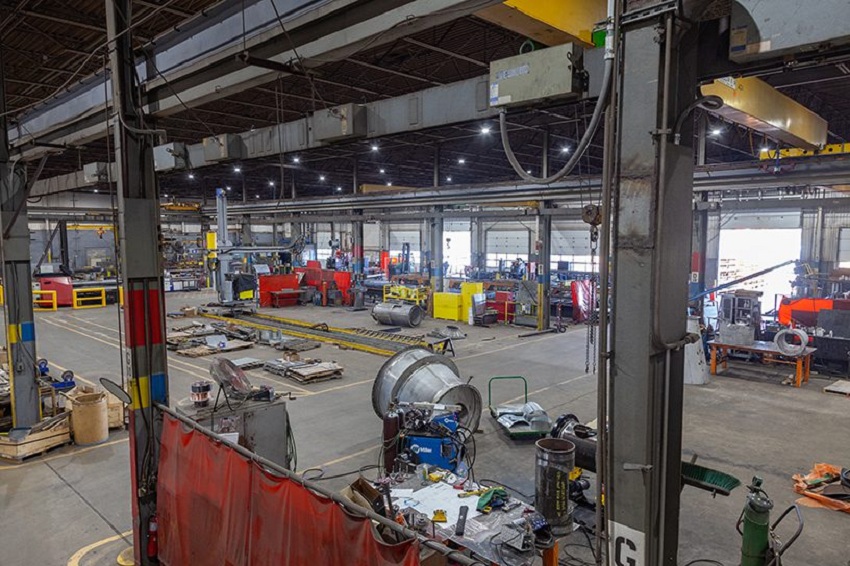
Corpus Christi’s industrial corridor produces more than 35% of America’s refined oil. The city processes more crude than almost any other refinery complex in the country. That volume depends on infrastructure that most people never see: the tanks that hold product between processing stages, the tanks that store finished fuel, the tanks that manage the hundreds of thousands of barrels moving through the port daily.
Building those tanks requires more than standard welding and fabrication. Corpus Christi’s location on the Gulf Coast creates environmental constraints that inland tank construction doesn’t face. Salt spray accelerates corrosion. Hurricane wind and storm surge impose structural demands. Product specifications demand precision that tolerates no margin for error. The combination has made Corpus Christi a center for specialized aboveground tank construction.
The Port Creates Constant Demand
The Port of Corpus Christi set a record in the second quarter of 2026, moving 55.8 million tons of commodities through the Corpus Christi Ship Channel. That marked the highest quarterly tonnage in the port’s 99-year history, surpassing the first quarter record of 54.5 million tons that had been set just months earlier. According to the port’s announcement, the 2026 first half represented a 7.7% increase compared to the first half of 2025.
Read More: Simple Fixes: Quick Wins to Refresh Your Restaurant’s Look
Crude oil exports through the port have accelerated substantially. In March 2026, crude oil exports exceeded 2.4 million barrels per day, among the highest monthly levels recorded for the facility. By May 2026, total crude oil outbound movement averaged 2.5 million barrels per day, with exports accounting for 96% of that volume. Omar Garcia, Chief External Affairs Officer for the Port of Corpus Christi, noted that since the Iran conflict began, crude oil exports moving through the port increased to 2.5 million barrels per day compared with 2.2 million barrels per day in 2025.
The refining infrastructure supporting that throughput remains substantial. One major facility operates a Corpus Christi refinery with a 167,000-barrel-per-day capacity, employing 1,400 employees and contractors as of 2024. The facility earned multiple ENERGY STAR certifications for efficiency and processes crude oil from multiple sources for domestic and international distribution. That refining capacity depends on storage infrastructure. Crude oil waiting to be processed requires holding tanks. Refined products leaving the refinery require storage tanks before distribution. LNG facilities that processed liquefied natural gas volumes up 33% year-over-year in the first quarter of 2026, driven by Cheniere Energy’s Corpus Christi Stage 3 expansion, need cryogenic storage and handling tanks. Agricultural exports that increased to 2.1 million tons in the first half of 2026 require commodity storage. Dry bulk materials including iron ore, barite and cement, which saw a 21% increase in 2026, require storage facilities designed for specific materials.
Each of those commodity streams requires dedicated storage capacity. When a tank must come offline for inspection or maintenance, replacement capacity has to exist elsewhere at the facility. New tanks are installed to add operational flexibility. Aging tanks that have been in service for 15, 20 or 30 years require replacement as materials degrade and capacity needs change. Capital projects at refineries and petrochemical facilities along the port frequently include tank construction or tank replacement as part of facility modernization.
The result is a continuous stream of aboveground tank construction projects that keeps specialized fabrication shops active throughout the year, independent of seasonal factors or economic cycles.
Coastal Conditions Create Engineering Requirements
Tanks built for inland facilities don’t necessarily work in Corpus Christi. Salt air corrodes unprotected steel much faster than freshwater or dry climates. A tank that performs well in Kansas City for 30 years might show significant corrosion in 15 years on the Texas coast. Material selection becomes part of the engineering requirement rather than an afterthought.
Design also changes for the climate. Hurricane season runs from June through November. Storms that track through the Gulf create wind loads that standard tank designs must accommodate. Elevated water tables near Corpus Christi change how tanks must be positioned and what foundation work becomes necessary. Flooding risk from storm surge adds another layer of environmental consideration.
Engineers designing aboveground tank construction for Corpus Christi facilities factor in salt-air exposure, hurricane wind speeds, seasonal rainfall patterns and proximity to coastal flood zones. Those factors determine material specifications, coating requirements, foundation design and structural reinforcement that would be unnecessary inland.
Customization Becomes Standard
Refineries and petrochemical plants rarely need identical tanks. Product specifications vary. Facility footprints differ. Existing infrastructure creates constraints. New tanks often have to fit into spaces where previous equipment occupied the location. Piping connections sometimes require custom positioning. Some facilities need floating roof designs for product vapor control. Others need fixed roofs because of space or operational requirements.
Corpus Christi’s tank construction shops handle that variability constantly. A facility might order a 500-barrel tank with a specific nozzle configuration that doesn’t match any standard design. Another facility needs a larger tank with modified access points to fit an existing maintenance schedule and site layout. A third requires a tank with particular internal baffles for product separation during processing. Each project becomes a fabrication challenge that requires engineering review, custom design and shop coordination. The expertise to manage that process exists in Corpus Christi because demand is consistent enough that shops maintain staff who specialize in exactly this work.
The Workforce Knows The Requirements
Welders in Corpus Christi who work on tank construction understand API standards for aboveground tank construction. They know the testing and inspection requirements that regulatory agencies impose. They understand how salt-air exposure affects weld quality and what coatings or post-weld treatments are necessary. Fabricators who’ve worked on 50 or 100 tank projects develop an intuitive sense for where problems emerge and how to prevent them.
That expertise takes years to develop. A welder trained on standard structural steel takes time to transition to tank construction, where quality tolerances are tighter and process specifications are stricter. Inspection technicians who understand tank-specific nondestructive testing aren’t interchangeable with general welding inspectors. Project managers coordinating tank fabrication need to understand how to sequence work, manage material flows and coordinate with the specialized equipment that tank fabrication requires.
Corpus Christi has accumulated this workforce over decades. The concentration of refineries and petrochemical facilities created demand that attracted workers. The demand kept them employed, which meant they stayed and developed expertise. That expertise attracts more complex projects, which justifies hiring more specialized workers.
Local Supply Chains Support Rapid Fabrication
Corpus Christi’s industrial infrastructure includes suppliers who stock materials specifically for tank fabrication. Plate steel in the dimensions and grades that tank construction requires is available locally. Welding consumables compatible with tank-grade steel are stocked and can be delivered quickly. Specialized equipment like hydro-test pumps and ultrasonic testing devices are available when needed.
That supply chain matters because tank construction timelines can compress quickly. A refinery might need a replacement tank delivered in a specific window when production schedules allow for installation. A chemical facility might have limited outage time available. Fabricators who can source materials locally instead of waiting for shipments from distant suppliers can compress fabrication timelines significantly.
The local infrastructure also includes testing services. Hydrostatic testing, ultrasonic thickness measurement, radiographic inspection and other quality verification processes are available without shipping components to distant facilities for testing. That reduces delays and allows quality verification to happen as fabrication progresses rather than after completion.
Regulatory Compliance Built Into The Process
Texas imposes specific requirements for aboveground tank construction. The new ASVS program requires documentation and certification of compliance with industry standards including API 650, API 653 and API Recommended Practice 2001. Facilities in Corpus Christi that have operated for years often must now retroactively document compliance or bring tanks into compliance with current standards. Fabrication shops in Corpus Christi work regularly with TCEQ requirements and API standards. That familiarity allows them to design and build tanks that satisfy regulatory requirements from the start rather than requiring subsequent modifications or retrofits. A shop that hasn’t worked under Texas regulations might miss requirements that result in project delays or costly rework. The engineering expertise to navigate those requirements while maintaining fabrication efficiency is concentrated in the Corpus Christi area. Shops that handle aboveground tank construction regularly for local refineries and petrochemical plants have learned how to integrate regulatory compliance into the fabrication process.
Why Projects Stay Local
Facilities in Corpus Christi have multiple options for outsourcing tank construction. They could send projects to fabrication shops in Texas cities. They could consider national fabricators. Most don’t.
Local fabricators understand the Corpus Christi environment. They know the coastal conditions, the regulatory requirements, the supplier ecosystem and the installation constraints that local facilities operate under. A facility manager who needs a tank designed, built and delivered within a compressed timeframe can work with a local shop that already understands the context rather than spending weeks explaining site-specific requirements to an unfamiliar vendor.
Read More: Prefabricated house: what are the main advantages?
Aboveground tank construction in Corpus Christi isn’t a commodity business where lowest price wins the contract. It’s a specialized service where project complexity, timeline constraints and quality requirements create value for shops that have built expertise in the local market. That expertise is why tank fabrication stays concentrated in Corpus Christi despite the ability to source fabrication services from anywhere. The port’s continued growth, the refineries’ ongoing capital projects and the petrochemical industry’s continued investment in infrastructure all suggest that specialized tank construction will remain a major part of Corpus Christi’s industrial economy. Facilities will continue to need new tanks, replacement tanks and customized tanks built to local specifications and standards. Shops with the expertise to deliver those projects reliably will continue to find demand for their services.